 55:13
55:13Anaesthesia for Microvascular Surgery & Free Tissue Transfer - Antithrombotic & Vasoactive drugs
- Published:
About
Wound management is a mostly straight-forward task. Some wounds, however, present unique challenges because of their size, shape, position or underlying structures. Where simple closures or skin grafting is not possible, the ability to transfer viable cutaneous tissue from one area to another has allowed people to overcome major wounds, reduce hospital stays, and return to a functional existence. Plastic surgeons have developed a number of techniques to move flaps of tissue, achieving both closure of wounds and aesthetic reconstruction of tissues.
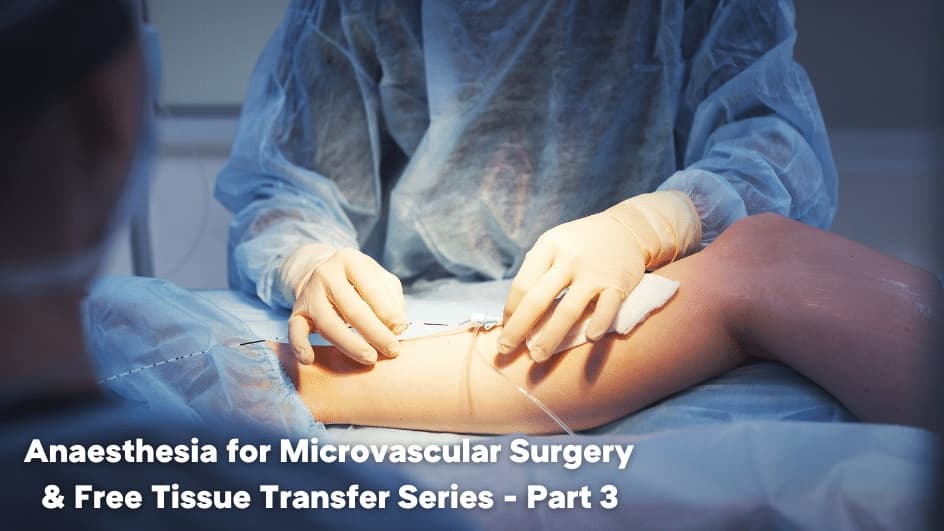
This is a 3 part series of presentations focusing on anaesthesia for microvascular surgery, and in particular, the microvascular surgery required for free tissue flap transfers. In part 3 the presenters look at the role of vasoactive drugs and their effects on flap viability and survival.
Learning outcomes:
- Understand the role and types of tissue flap surgery in wound management
- Consider the physiology and surgical implications of flap surgery, and the management of anaesthesia to facilitate outcomes
- Review the use of vasoactive and anticoagulant drugs in both the intra- and post-operative period
Host

Presenters